
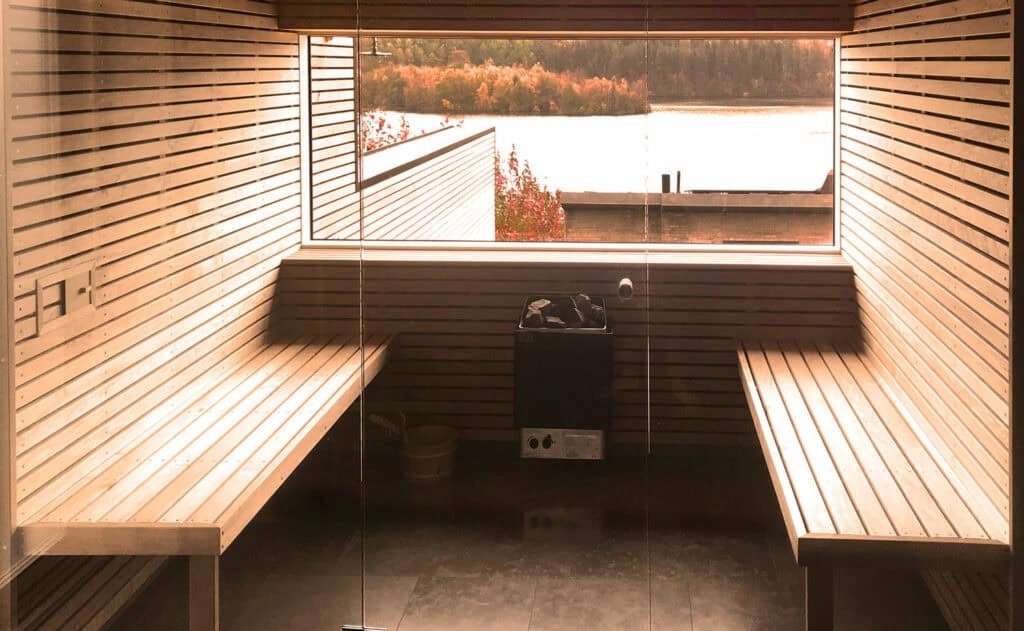
This is a general guide and how your sauna should be treated. It may vary depending on which sauna heater you have chosen. Therefore, always follow the sauna heater manual first.
Preparation before first use
The cabin
Complete cleaning of the sauna: Thorough vacuuming. Use a brush attachment to avoid damaging the wood and scratching it. Start with the ceiling. Then the wall panels. Then the benches, and finally the floor. Wipe all surfaces with a hard wrung cloth. Use a quality cloth that does not leave “lint”.
Oven
Always read the sauna heater's manual before first use and always follow the manufacturer's instructions.
Loading sauna stones
- Use stones of a size that suits the chosen sauna heater.
- Wash the stones in clean water.
- Place the stones loosely so that air can flow through freely.
- The stones must be completely dry before turning on the stove.
- Check the electrical connections of the stove and test light the stove for 20 minutes. It is normal if the sauna emits a limited amount of smoke and odor during the test light. The odor should disappear again.
Running-in
- Set the sauna heater to maximum temperature and leave it on for an hour.
- No one is allowed in the sauna during this period. It is quite natural that sauna stones can split/crack due to natural internal tensions that are released during heating.
- Check for the presence of, and remove, any stone dust under the stove.
- Sterilize the sauna stones with steam by slowly pouring water over the stones. You are pouring too quickly if water gets on the floor under the stove. Use approximately 1 liter per 20kg of sauna stones. Always follow the manufacturer's instructions. Not all sauna stoves tolerate being overfilled with water equally well.
Sealing/oiling wood
Before using the sauna, it should be decided whether:
- All surfaces are left untreated.
- All surfaces are treated with oil.
- Parts of the sauna are oiled, while others are left untreated.
At Nordkap Living, we recommend that sauna benches and backrests be treated with real sauna oil and that wall panels be left untreated.
If the sauna is to be used for professional use with intensive sauna steam, it is recommended to re-treat all oil-treated wood at least twice a year, and optimally every month — but always as needed.
The bench is the most exposed part of the sauna, and the oil protects against water splashes and moisture stains, and makes cleaning easier. Be careful to remove excess oil. The oil, together with natural dyes in the wood, can discolor light-colored swimwear.
Sauna wood can only be oiled after thorough running-in with full heating and cooling. After treatment, heat and cool the sauna again and remove any excess oil thoroughly with a dry cloth.
Real Sauna Oil does not emit odors to the surroundings, even when heated. The wood best retains its natural glow and color, and feels minimally warmer to sit on.
Ongoing maintenance
With very little maintenance, saunas are relatively easy to keep clean for a long time.
- Always shower before using the sauna.
- Make sure that the floor outside and inside the sauna is cleaned regularly. Clean feet make for clean sauna benches. Avoid splashing on woodwork. Do not use a high-pressure cleaner or hose down floors.
- Always use a quality towel to sit on, preferably folded twice, to avoid grease and salt deposits on the wood.
- Wash the benches regularly in clean water and possibly with a mild soap solution. If the benches are oiled, soap treatment will remove the oil, which is why the bench must be oiled afterwards as needed. Wipe the outside of the stove as needed with a wrung-out cloth dipped in a mild soap solution, or with a descaling agent as needed. If water has been spilled on the stove, the stove should always be wiped after use. Always follow the sauna stove manual.
- Wooden sauna buckets should always be partially filled with water to prevent drying out and stored on the floor to minimize evaporation. Fill the bucket with clean water before use.
Always empty metal sauna buckets and sauna buckets with plastic liners of water and turn them upside down to dry. Do not leave them on the bench as they may leave marks.
Due to heat and moisture effects, it is completely normal for door frames and panels to expand and contract. The sauna door can be easily adjusted in hinges and roller lock.
Over time and depending on use, sauna stones will crack as a result of temperature fluctuations and should be replaced to ensure continued unhindered air flow between the stones. We recommend that you remove all sauna stones from the stove, vacuum the stove and remove cracked sauna stones. Finish with a new layer of neat sauna stones. Do this at least once a year to prevent the stove from becoming “clogged” with small stone fragments that prevent air from traveling through the stone basket.
Nordkap Living can offer an annual service inspection or a service agreement tailored to your needs.
Thorough cleaning
If necessary, sauna wood can be thoroughly cleaned to remove stains or discoloration. It is recommended to use a dedicated sauna soap for this purpose.
After thorough cleaning, the wood is left more vulnerable than when new, as some of the wood's natural wood protection has been removed. Therefore, untreated wood should always be sealed with sauna wax after thorough cleaning. Sauna benches are treated with sauna oil.
Repairs
Small nicks and scratches in the sauna wood can be removed with a damp dish towel and an iron. If the bench is very worn, you can sand it with a random orbital sander with 220 grit. (Start with 80/120 grit for deeper sanding if necessary)
Remember to cover the sauna heater thoroughly with dense plastic to avoid fire hazards from sawdust.
In sauna stoves where the heating elements are placed between the stones, these are particularly vulnerable. This type of stove is not recommended where sauna baths are held, or where the stove is frequently doused with water. The sudden and large temperature fluctuations caused by dousing with water can cause microfractures in the heating elements, so that the heating elements are no longer functional.
Heating elements should be replaced by a professional.