
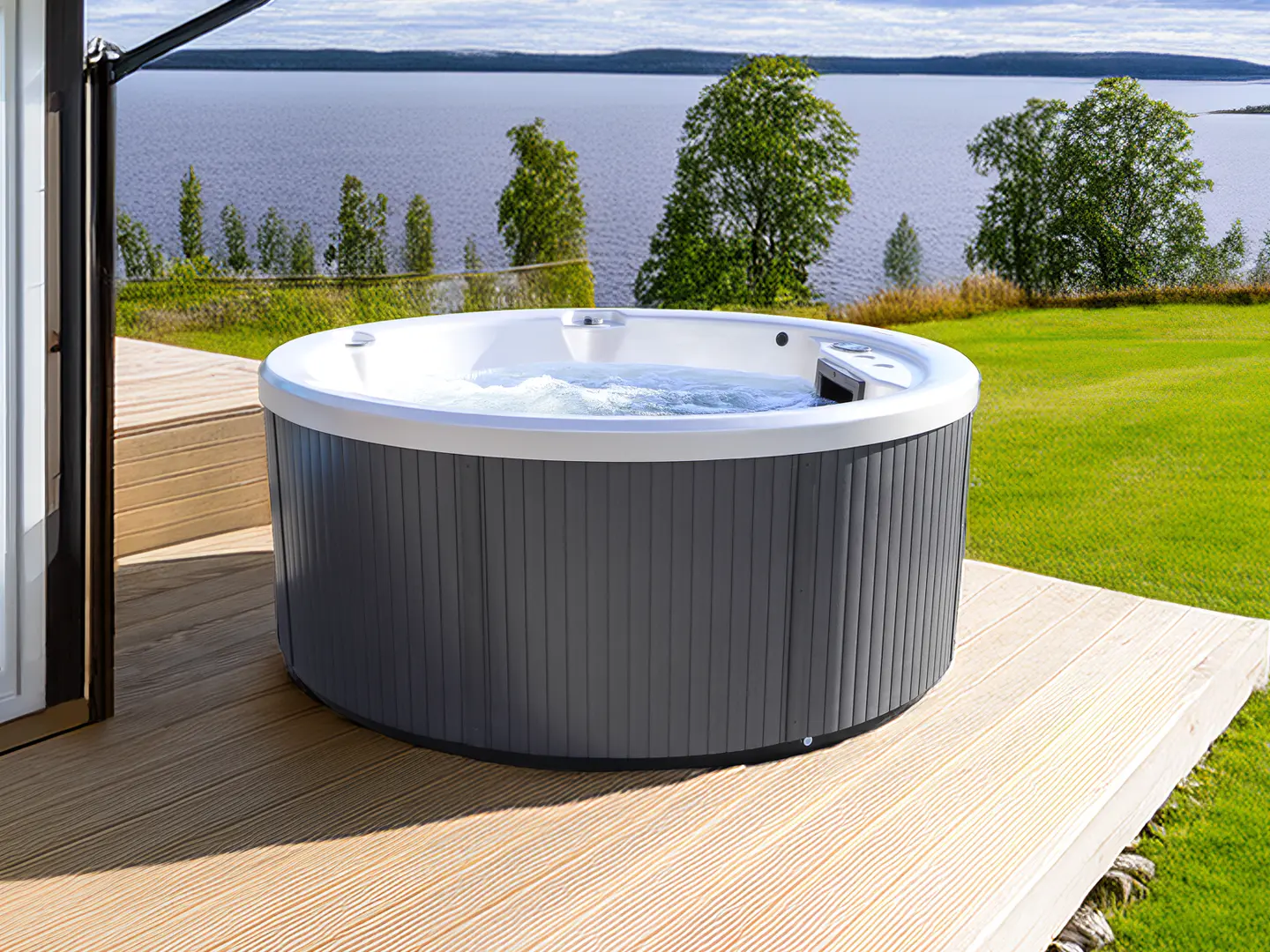
Enjoying a hot bath is an ancient tradition where humans have harnessed the soothing and healing properties of water. This is not just limited to humans, as even the snow monkeys of Japan have discovered the benefits of naturally hot baths.
Man has always sought mineral-rich water, naturally warm water and seawater, for pain relief.
The history of bathing culture is evident in Europe, with Roman baths still visible. Many cultures, including the Greeks, Chinese and Japanese, have had their own bathing customs with natural or artificial “bathtubs”.
Brief history of hot tubs
Spa culture can be traced back thousands of years, when hot springs were used for therapeutic purposes. Today, technology has advanced, but the principles behind hydrotherapy remain the same. Modern outdoor spas combine traditional water therapy with advanced massage features and energy-saving solutions – all to create an experience that benefits both body and mind.
The 19th century saw a surge in interest in hydrotherapy, the treatment of illness with water. However, hot tubs as we know them were not really developed until after World War II, and with the help of fiberglass and acrylic, hot tubs can now be produced at an affordable price.
At Nordkap Living, our mission is to produce simple and functional models in a Scandinavian style. The few bright colors and clean lines are the perfect recipe for creating the perfect open space. In addition, electronics can be purchased if you are into light therapy or calm music.
In Scandinavia, we are happy about the life-giving effect of warm water on body and soul. Spending time with family and friends is a major reason for the popularity and spread of the hot tub.
The outdoor spa can be enjoyed all year round and, unlike swimming pools, is particularly popular during the winter period.
Nordkap Living offers a large number of different outdoor spas. What they all have in common is that they are stock items that can be delivered quickly.
Discover the many possibilities
The modern outdoor spa has many options. For example, it can be connected to your network at home. This means you can control your spa from your smartphone either using WiFi or your mobile internet.
Automation
The automatic water filling system always ensures the optimal water level. With features such as automatic chlorine dispenser and automatic draining, maintaining water quality is made easy for holiday home owners with outdoor spas.
Microsilk®
You can upgrade your outdoor spa with MicroSilk®.
MicroSilk® is an innovative water technology patented by Jason. They describe MicroSilk® as advanced skin care, consisting of billions of microscopic air bubbles that penetrate the skin. They do this without cooling the water, as in a regular air massage.
MicroSilk® and water massage cannot be combined, so you have to choose one of them. MicroSilk®technology is only sold with new outdoor spas. If you have any questions, please don't hesitate to contact us.
Source: MicroSilk by Jason International | Hydrotherapy | Microbubble Technology
External heating
The spa can be connected to an external heat source such as a heat pump, solar heating system or wood-burning stove. The built-in heater can still be used alone.
Non-electric heat sources reduce power consumption, and for example, a heat pump provides more heat relative to power consumption than a radiator. Increased heat means faster heating.
Heat pump
For energy savings, you can use an air-to-water heat pump to heat the water in your outdoor spa. The heat pump delivers more heat per kW of electricity compared to a heater. It acts as a base heating, while the built-in heater fine-tunes the temperature during use.
Nordkap Living offers heat pumps for outdoor spas in various sizes with or without WiFi control.
Manufacturing of the modern hot tub
A modern hot tub is made from durable fiberglass and acrylic, which can be easily shaped using molds. They ensure that tight tubs can be produced quickly and easily.
The video below shows a simplified version of the manufacturing process:
Swim spa
The swim spa combines a regular outdoor spa with a swimming pool. It offers the same massage and heating functions as a traditional spa, as well as powerful jets. The jets can be adjusted to suit both beginners and advanced users. The swim spa is a space-saving and heated alternative to swimming pools. Perfect for play, exercise and wellness all year round.
Wilderness swimming pool
The wilderness bath is also an outdoor spa variant. At Nordkap Living, our cedar wilderness baths are equipped with a filter system and electric heater.
The wood-burning stove, for quick heating, and the electric heater for long-term heat maintenance, are the ideal combination for long-term heated water without the risk of scalding. Make sure the tub is filled with water year-round to prevent damage, and use a filter system for cleaner water. A starter kit provides everything you need to maintain optimal water quality.
The Vancouver model, with 25 air massage jets, is the only model without a wood-burning stove.
To ensure water quality, it is recommended to use the chemicals found in the starter kit with chlorine or alternatively without chlorine (sold separately). The filter should be cleaned regularly and replaced when it no longer comes out clean.
Materials
Some of our hot tubs are made from Western Red Cedar; a cedar wood with natural resistance to rot, fungus and insects. Its beautiful reddish color can be preserved for a long time with proper care. The cedar wood comes from forestry in Canada and is PEFC certified.
Cedar is known for its exceptional durability, and the best grades are used in construction. Its lifespan can be extended with an oil seal treatment. Maintenance requires a wax oil treatment once or twice a year
Some of our wilderness hot tubs are also made of spruce from Eastern Europe.
Technical details
Nordkap Living places high demands on the outdoor spas and swim spas we sell. Not only must the product meet the requirements for electricity and product safety in the EU and Denmark, but we have a number of quality requirements that we will comply with. All hot tubs are also tested before they are sent to the customer, which is why there is sometimes water in the pipes and hoses when the product is delivered.
Insulation according to Danish climate conditions
An outdoor spa is outside and used all year round. Therefore, the insulation must be top-notch. This is important to save on heat and energy consumption.
Nordkap Living's tubs are insulated with an extra thick layer of foam. In addition, the sides are covered with reflective foil, using a six-layer insulation technique. This ensures that the heat from the pump and the electrical installation does not leak out. The bottom is also foam insulated, and the tub is thus insulated according to the Scandinavian weather conditions.
Covers
A cover is included with the purchase of an outdoor spa at Nordkap Living. The cover is extra thick to save on heat and energy.
The cover has two purposes:
- To prevent dirt from getting into the water when the spa is not in use,
- To retain heat. The extra thick cover provides better insulation, as does the extra thick layer of insulation foam on the tub itself.
The cover is attached to the tub using straps equipped with a combination lock. This prevents unauthorized access, but also ensures that the cover does not come off easily, which reduces heat savings. The skirt, which hangs over the sides, ensures that the cover fits properly.
Slope on cover surface
The slope of the cover allows rainwater to run off, reducing the risk of algae growth. It also prevents precipitation from weighing on the middle, which would cause the cover to curve downward over time, thus collecting even more water.
If your cover becomes worn over time due to weather, accidents or other factors, you can purchase a replacement cover at Nordkap Living.
American governance
Americans have the greatest experience when it comes to manufacturing modern hot tubs. That is why Nordkap Living has chosen to use controls and electronics from the American company Balboa. Balboa is one of the world's largest and most skilled manufacturers in the field. This ensures a durable and efficient control, as well as pumps and heating elements that you can trust.
To ensure a competitive price, Nordkap Living only uses a few models of this control. This may mean that, for example, the “Jets3” button may not function, as there is no third set of jets in the spa.
Some of our models have controls from the Canadian company Gecko, which is also among the largest manufacturers in the industry. Both they, and Balboa, have proven to be a good and reliable investment.
Nozzles with stainless steel casing
Stainless steel covers give the nozzles an exclusive look, as well as significantly better durability. They are easier to keep clean, and the surface is clearly included, as a “chrome-plated” plastic cover would do.
Ozonator
Nordkap Living's outdoor spa is equipped with an ozonator. It is a small device that converts oxygen into ozone. Ozone is a gas that is released into the water, where it helps kill bacteria.
Please note that the ozonator cannot stand alone in combating the bacteria. Chemical treatment of the water is necessary to maintain healthy and hygienic water quality. In publicly accessible spas, this will be legally required.
An ozonator has a limited lifespan and is considered a consumable item that must be replaced. The lifespan depends on the use of the spa.
Power consumption
Nordkap Living's outdoor spas are typically equipped with 3kW heaters. They use a total of approx. 5 kW at peak load (heater + pumps, lights, etc.).
Our outdoor spa is connected with 400V/16A, which guarantees that you can use the heater and the jet pumps at the same time. Competing products that are connected with 230V/10A, and are equipped with, for example, a 2kW heater and a 2.5 HP jet pump, do not have this option. The same applies to spas that have a two-stage pump, where the low speed is for circulation and filtration.
Connection should be made with a 2.5 square wire and its own fuse group.
The cost of operation varies:
Variable factors
There are many factors that can come into play when we talk about electricity consumption for an outdoor spa. It is important to remember that the cost of electricity varies greatly over the course of a year. Therefore, we cannot accurately calculate how much an outdoor spa costs to operate.
The following factors also play a role:
Where is the outdoor spa located? Is it sheltered from wind and drafts? Is it buried or otherwise shielded? Is it in a conservatory or under a half-roof?
How often is the outdoor spa used? Is it used several times a day or maybe once a week?
What is the weather like? Temperature, precipitation and wind have a major impact on energy consumption.
How can you keep your costs as low as possible? To reduce your electricity costs, we recommend purchasing a heat pump. With a heat pump, you can reduce your electricity consumption by more than 50%.
Heater
The heater is a metal tube with a heating element inside. A sensor is inserted at both ends to measure the inlet and outlet temperature, and the power supply to the heater is routed through the wall of the tube. These penetrations are fitted with gaskets that are durable for normal operation.
Warning!
If you turn on the heater without water in the spa, the heat in the pipe will become so great that the gaskets will melt/burn off. This is not covered by the warranty under any circumstances.
Similarly, an incorrect pH balance in the water can dissolve these gaskets and then cause the heater to burn out.
How quickly does the water heat up?
The following is a theoretical calculation of how quickly water heats under ideal circumstances.
There are many factors that come into play here (see above under “consumption”), therefore the calculation must be considered indicative.
Based on the heat capacity of water, we can calculate how quickly 3 kW causes the water temperature to increase by 10°C.
It takes 1000 g x 10°C x 4.2J = 42,000 Joules to raise the temperature of 1 liter of water by 10°C. (1°K is here equivalent to 1°C.)
1 kWh corresponds to 1000 W x 3600 sec. =3,600,000 Joules, and 3 kWh (3 kW for one hour) then corresponds to 10,800,000 Joules.
It takes 42,000,000 Joules to heat the temperature of 1,000 liters of water to increase by 10°C. This means that 3 kW uses 3.8 hours to heat 1,000 liters of water by 10°C. If you pour cold water into the tub, it will typically need to be heated up by about 30 degrees, which will take about 12 hours. (Maybe a little more, as there is some heat loss along the way; the tub needs to be heated up, and other factors also affect heat loss.)
As mentioned before, it is possible to use external heat sources, if the outdoor spa is prepared for it. This will of course change several conditions. A larger heat source will heat the water faster. However, it will still take the same energy to heat the water: 6kW heats twice as fast as 3kW: you save time but not energy.
Frost protection
Balboa electronics and components come with frost protection. The spa can be programmed and set to frost protection via the control panel. If you choose to drain the spa during periods of frost, you must ensure that there is no water in the hoses, heater and pumps. This can be done by blowing them out of water with a compressor. However, it is best to set the control to frost protect the tub.
Water treatment
Ensuring water quality is an essential part of the spa's function. Poor water quality results in a poor experience.
Anywhere you have heated water — especially when you bathe in it — there will be opportunities for bacteria to grow in the water. The spa is equipped with an ozonator that keeps bacterial growth down, but it cannot do it alone. You will need to supplement the ozone treatment with chlorine tablets or a chlorine-free agent to effectively keep bacterial growth (and algae growth) down.
One of the important things about water quality is to ensure that the water's pH value is correct. In Denmark, lime is usually present in the water, and this may result in a need to lower the pH value. For this purpose, Nordkap Living sells pH Minus and a measuring set for chlorine or chlorine-free water treatment.
Water change
The water should be changed as needed. With normal use, this will be once every two months. If you have problems with the water quality, it may be a good idea to drain the water, clean the tub as well as possible and start over with fresh water.
Water inlet and outlet
The spa is usually filled with a water hose.
When the water needs to be drained again, it is done via a tap at the bottom of the spa. Remember that the water must be drained away, and that there is a lot of water in a spa. Use a hose to drain the water to a drain or into the garden (not recommended for chemically treated water).
Maintaining your outdoor spa
To maintain an optimal bathing experience, regular maintenance is important.
Remember that:
- Adjust the pH value and ensure that the water quality is in balance.
- Change and clean filters regularly.
- Use a quality cover to protect against dirt and reduce heat loss.
With the right habits, it's easy to keep your outdoor spa in top shape so you can enjoy it for many years to come.
Glossary
Circulation pump
A circulation pump is a pump that keeps the water circulating. This is important for the filtration of the water, and thus the water quality. The circulation pump can be regulated through program settings in the display. When the water pump is running, the ozonator also runs. The heating element only runs when the circulation pump is running, as otherwise it would lead to overheating of the heating element. In the standby mode and frost protection, the control panel will switch on the circulation pump and the heating element after a preset time interval.
Display
The display is the “brain” of the outdoor spa. From here, the pumps, temperature and various maintenance programs are controlled to ensure water quality and prevent frost heave. Nordkap Living primarily uses the American Balboa control, which is among the world’s most recognized.
Nozzles
The nozzle, at the end of the hose, carries water from the jet pump back to the tub, which provides the water jet that massages. Some nozzles can be directed by rotating the inner part. At the same time, these nozzles have a strength setting that is operated by turning the ring located at the front. The smallest nozzles cannot be adjusted individually. On most outdoor spas, it is also possible to regulate nozzle groups using one or more buttons on the edge of the tub.
Filter
One or more filters help keep the water clean.
These filters filter dirt from the water and must be rinsed out or cleaned regularly, and they should be replaced when it can no longer be cleaned. Filters are consumables and have a limited lifespan. For cleaning filters, Nordkap Living sells Filter Cleaner.
Filter No. 2 is an extra fine filter that captures even very small particles in the water. It is standard as a third filter in some of Nordkap Living's outdoor spas, where the other two are lamella filters. Due to the fine-meshed filter membrane, Filter No. 2 has a shorter lifespan, and unlike the lamella filter, it cannot be cleaned with Filter Rens. Filter No. 2 can be replaced with Filter No. 1, which is a lamella filter.
An effective way to keep the filters clean without reducing the time the spa is available is to purchase an extra set of filters and clean the dirty set in a bucket.
Jet pump
One or more jet pumps provide the powerful water flow in the massage jets. The jet pump is the most powerful pump in a spa.
Therapeutic light
Some spas are equipped with “therapeutic light.” The purpose of the light, which changes color at a slow pace, is to create a calming effect.
Water volume
The amount of water in an outdoor spa varies from 500 liters in the smallest outdoor spas to 8500 liters in the largest swim spas.
Water volume
The amount of water in an outdoor spa varies from 500 liters, in the smallest outdoor spas, to 8500 liters in the largest swim spas.
Quality control
All Nordkap Living hot tubs are assembled and tested in Denmark before being shipped to the customer. Therefore, there will be residual water in the hoses and drains.
Self-control
Upon receipt, the customer must check that the packaging is intact and that the product has not been damaged during transport. Before installation, the installer must ensure that all hoses and cables are correctly positioned.